Salt ridge: on the border of two worlds
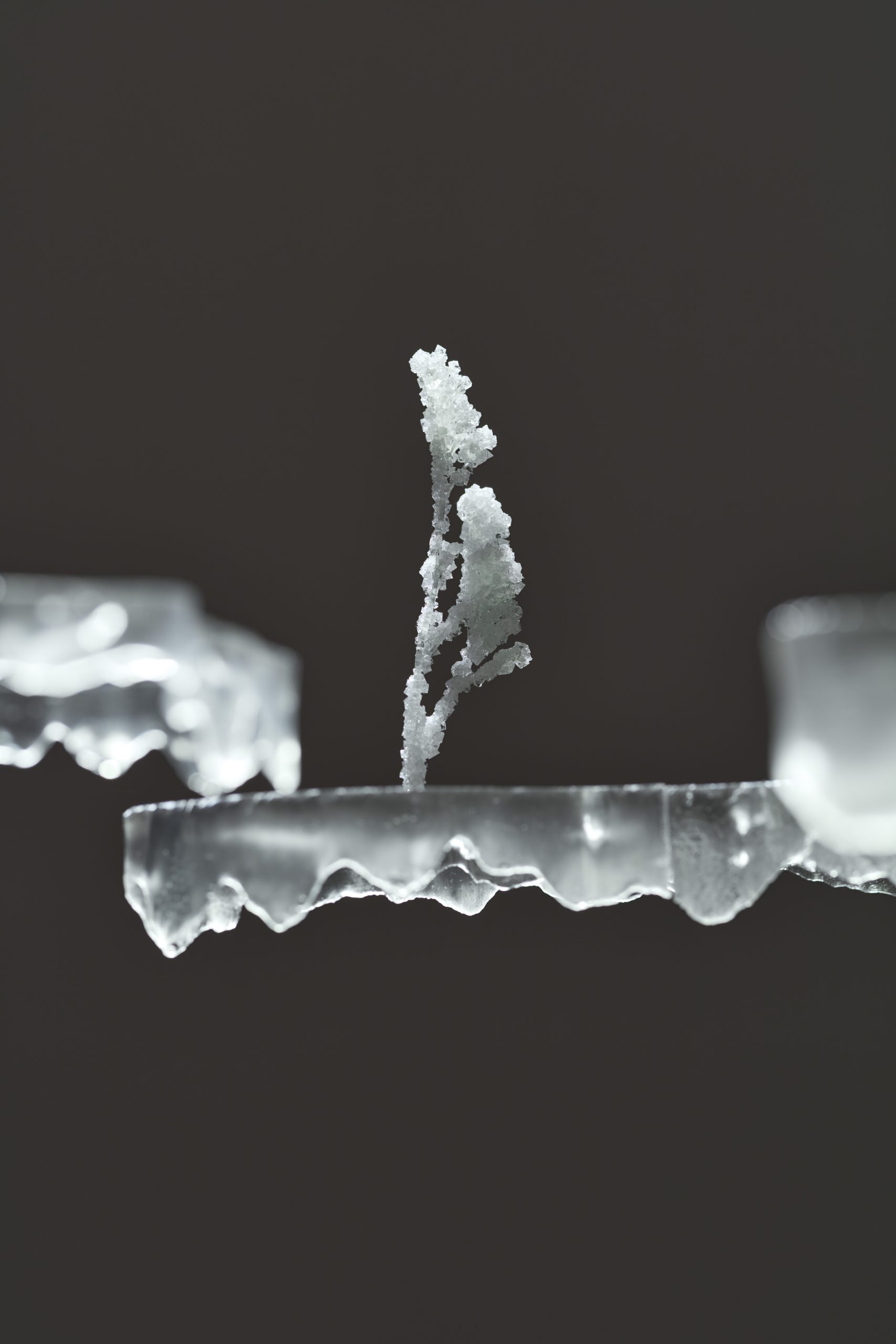
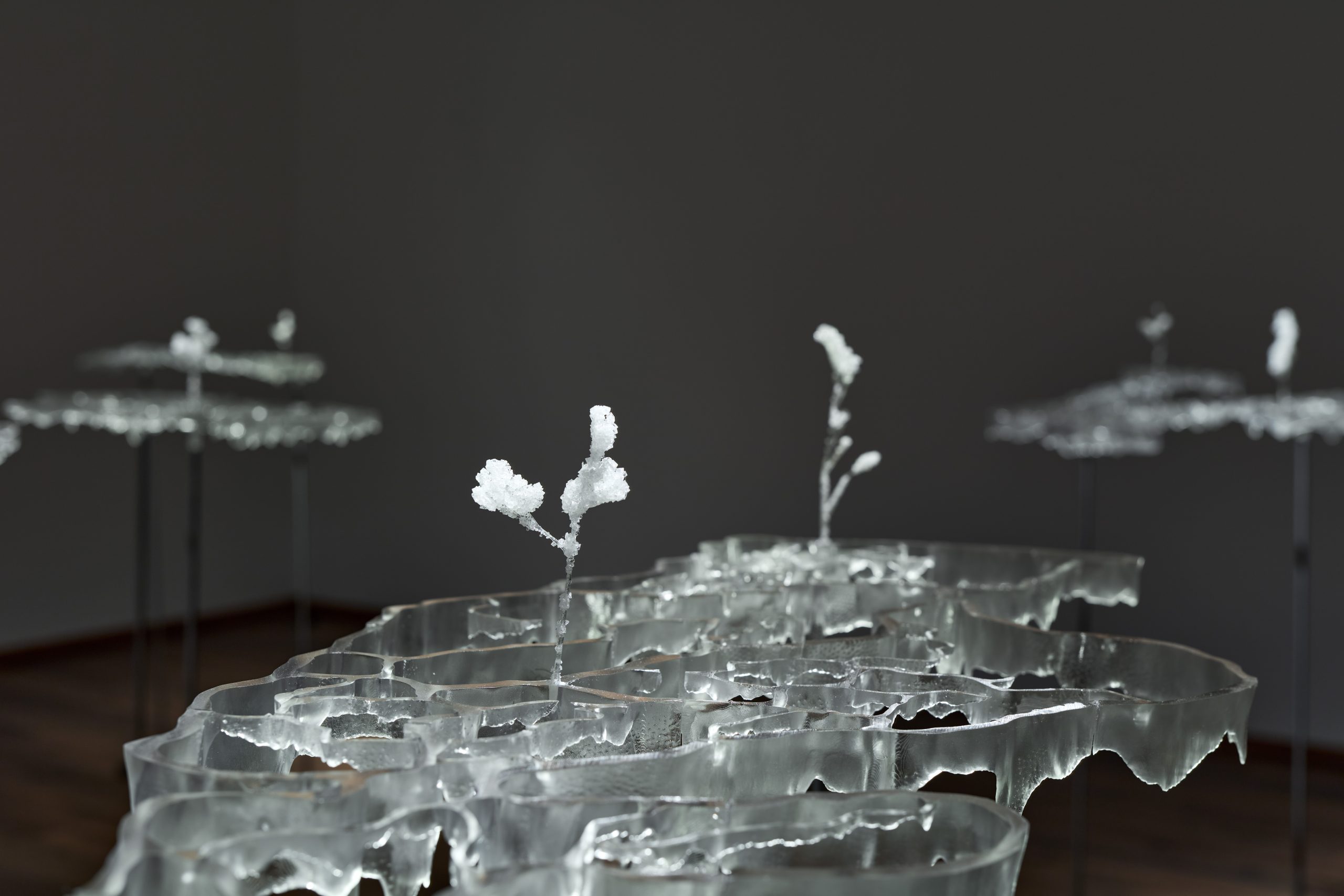
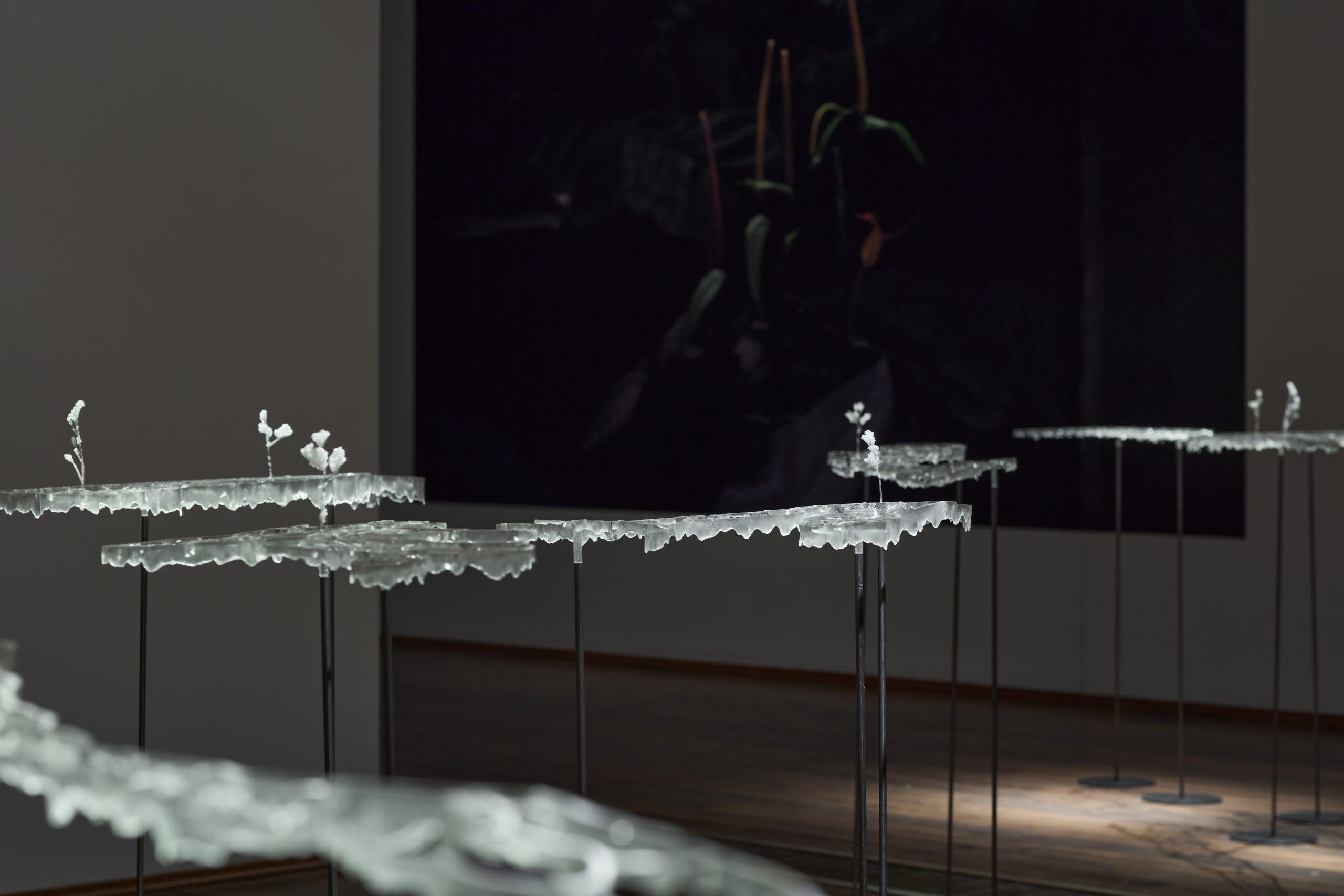
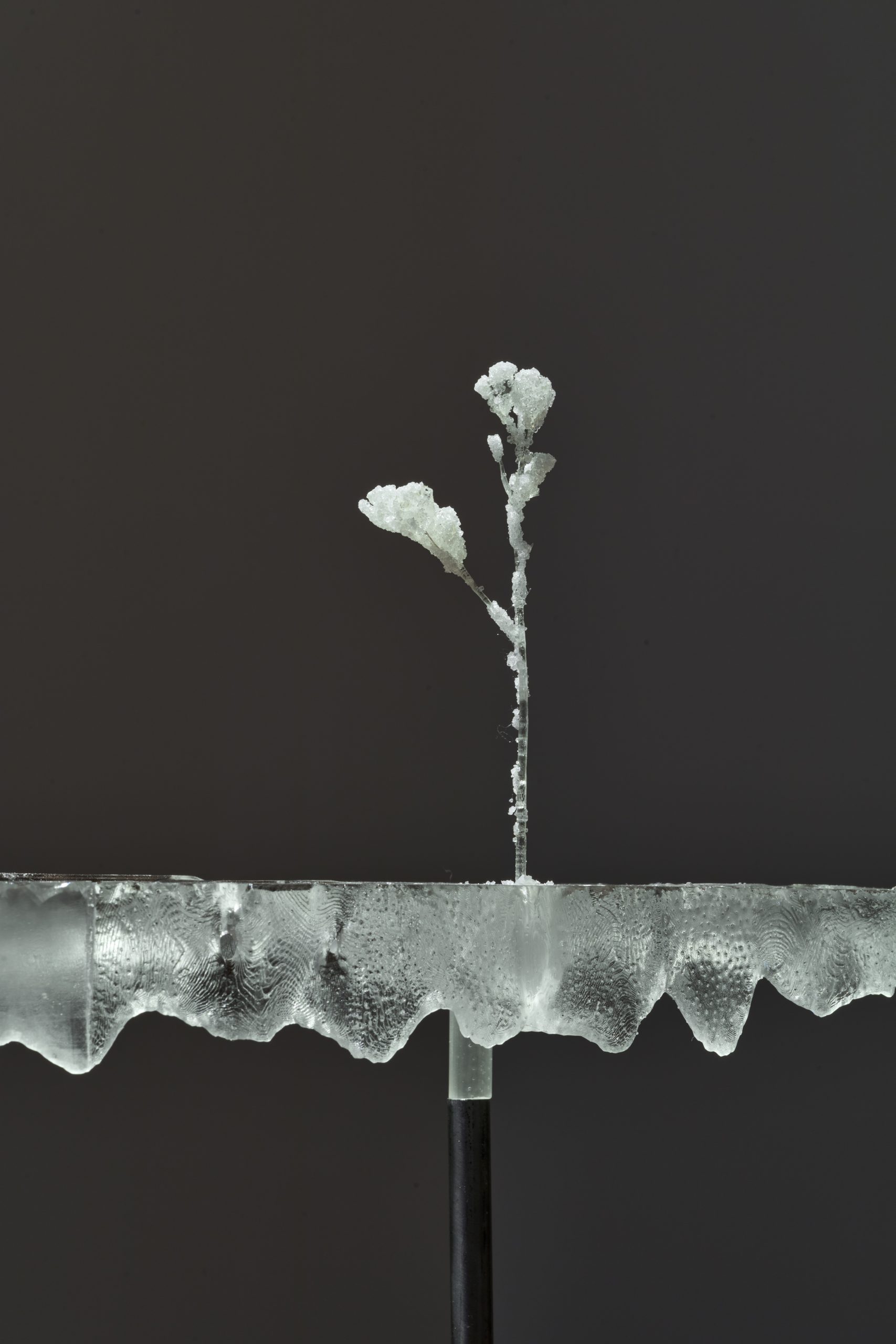
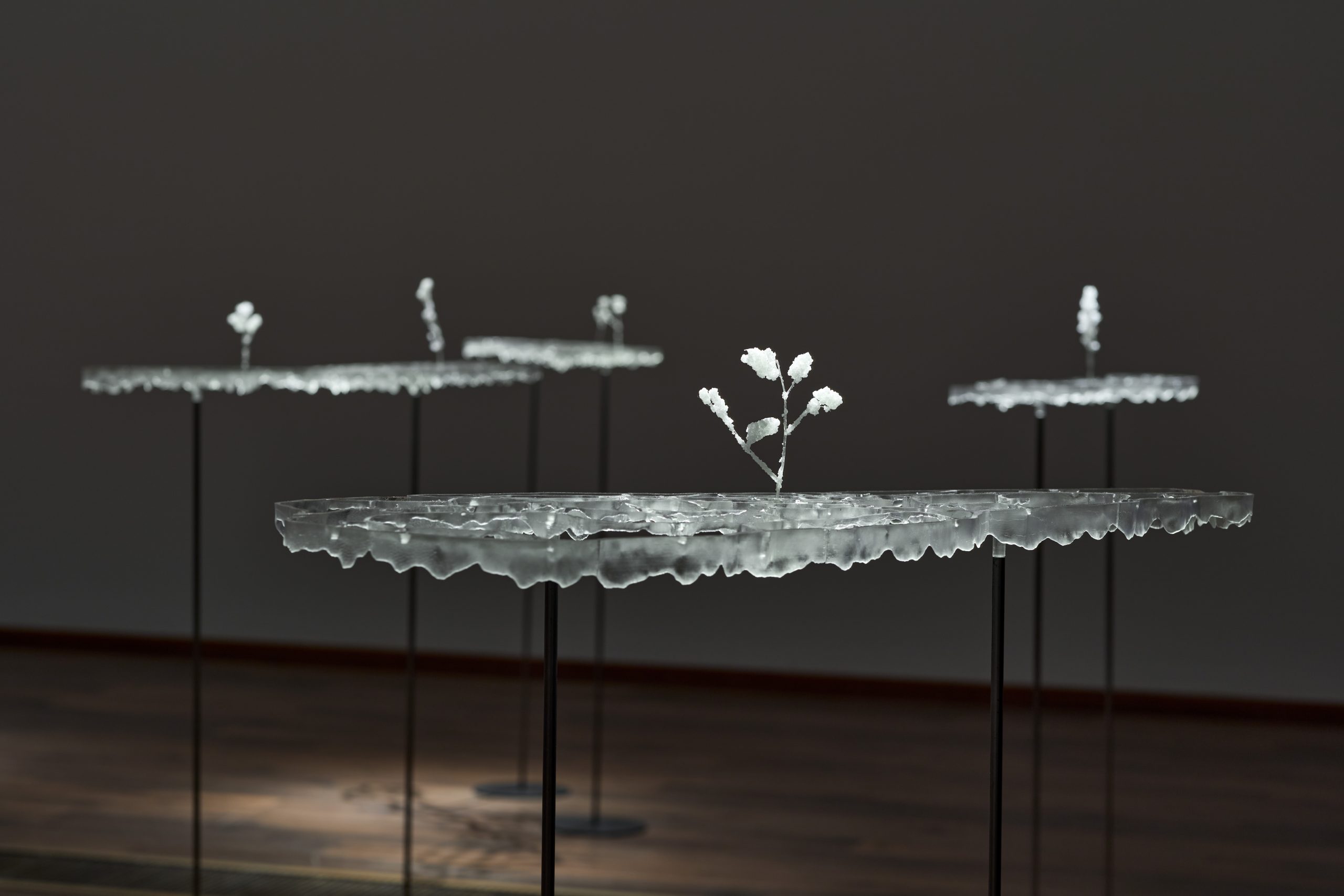
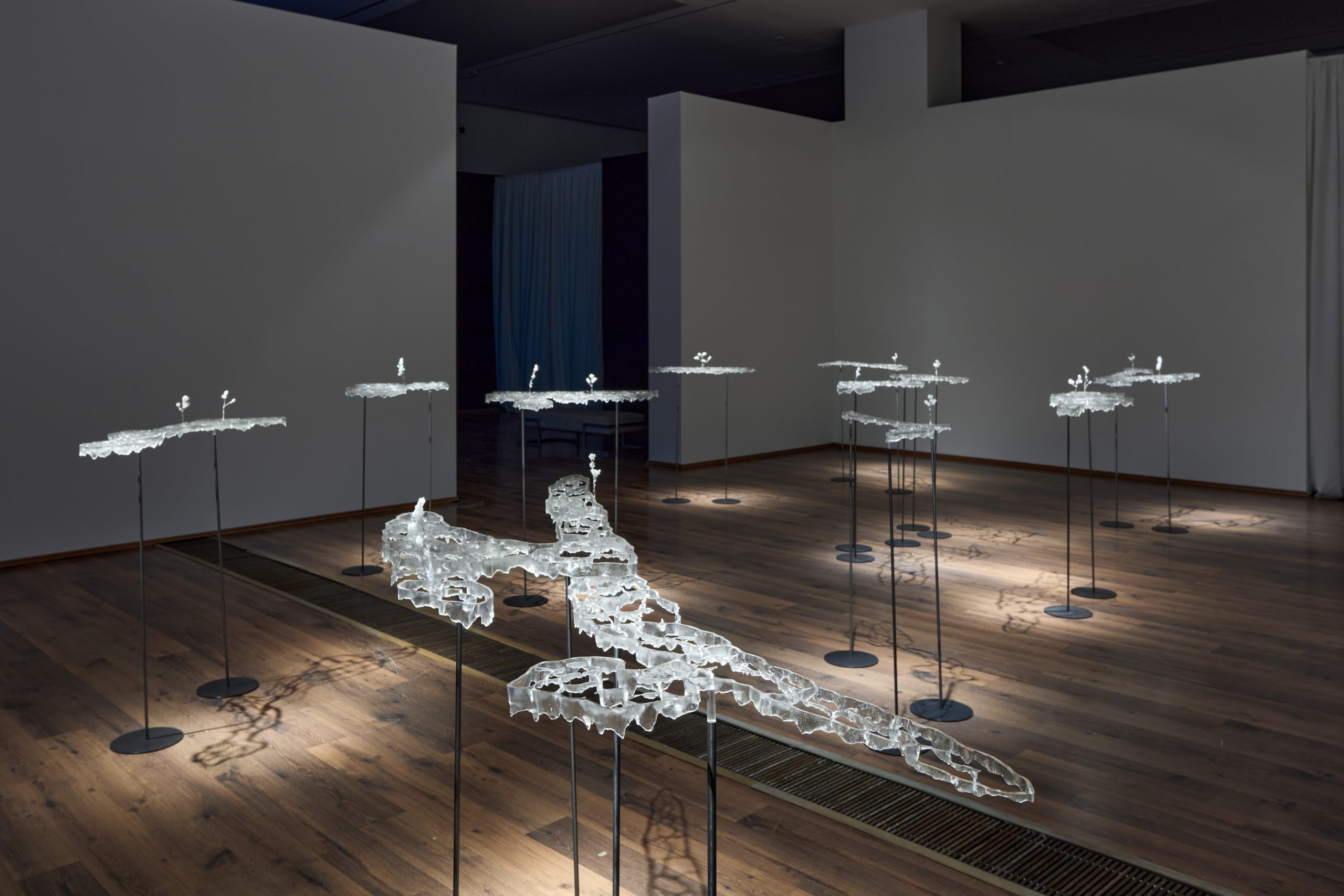
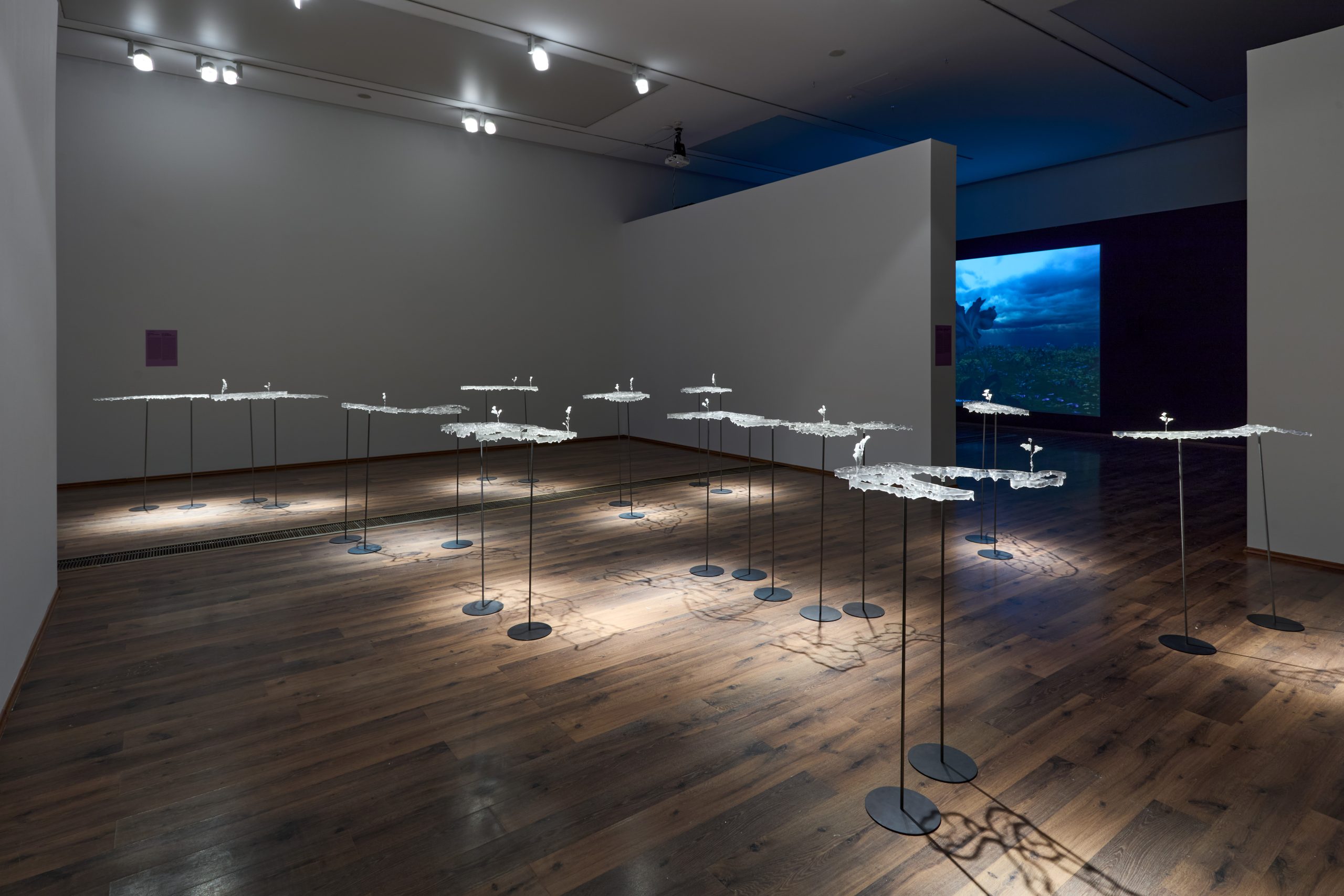
Although Nóra Szabó’s critical art practice, which is shaped by the principles of posthumanist discourse and aesthetic, is primarily oriented towards the crisis and change in the representation of the human body image and, at the same time, the reconfiguration of the scattered remains of the human figure, her diverse combinations of materials and media, as well as her hybridization techniques, also open up space for visions of speculative or even nonhuman entities and realities. In this latter context, on can discuss the unusual configurations and the crystalline structures applied to them, which represent the mosaic-like soil patterns of the high-salinity soils of the Hungarian steppe (puszta) and the shapes of a specific indigenous plant species of the Great Hungarian Plain (Alföld), the Hungarian saltwort (Limonium gmelinii). The sculptural, island-like forms in the space are negative forms of cracks in the salt ridge recreated from resin. These translucent imprints, and the voids revealed between and through them, suggest the semming barrenness of the steppe (puszta), the long summer droughts, the high salt content of the soil, and the low rainfall. This apparent lifelessness is contrasted, however, by the similarly translucent flowers, covered with salt crystals, which, in the case of the group of objects, are given body by the very material that represents their daily struggle in the living world. To this extent, the crack marks, and the branch-like stems and flower clusters that are attached to them, not only evoke the extreme enviromental conditions of the specific lowland but also point to the adaptive and resistant modes of operation that ensure the survival of vegetation with an optimally slowed metabolism, suggesting a shift towards a temporality that may extend beyond the human scale.
— text by Edward Kovács, assistant curator at Modem
This project was realized within the framework of the Learning from Nature? Botany exhibition at MODEM.